Avalonia vs Qt
Put your budget into the product. Build desktop and embedded interfaces in C# and XAML, ship them on Linux today, and pay no framework seat fees or per-device royalties.
The cost of shipping
Free to adopt. Free to develop. Free to ship.
The MIT-licensed framework and the Visual Studio Code extension are free for commercial work, on desktop, mobile and embedded. Qt for Device Creation Professional is €6,890 per developer per year, before device distribution fees.
Free
The MIT framework and a free Visual Studio Code extension. Free for commercial development too.
€6,890
Annual developer licence. Device distribution licences cost extra.
€0 to adopt, develop and ship. Free VS Code tooling included.
Annual developer fees. Additional fees for each device.
Why it matters
One of these fees grows with your team and the other with your sales. A developer licence is paid for every person, every year. A distribution licence is paid on every unit, for as long as you ship. With Avalonia neither exists, so what the framework costs doesn’t change when the team or the volume does.
EUR list prices from Qt’s pricing page, checked 21 September 2026, excluding VAT and negotiated discounts. Qt also has open-source and small-business terms, and only devices pay per unit: the questions below cover each.
Who builds the interface
Put the interface in the hands of the developers you already have.
With Avalonia, a .NET team builds the application logic and the custom controls in C#, with the XAML and MVVM it already knows. Your C++ specialists stay on the code that needs them.
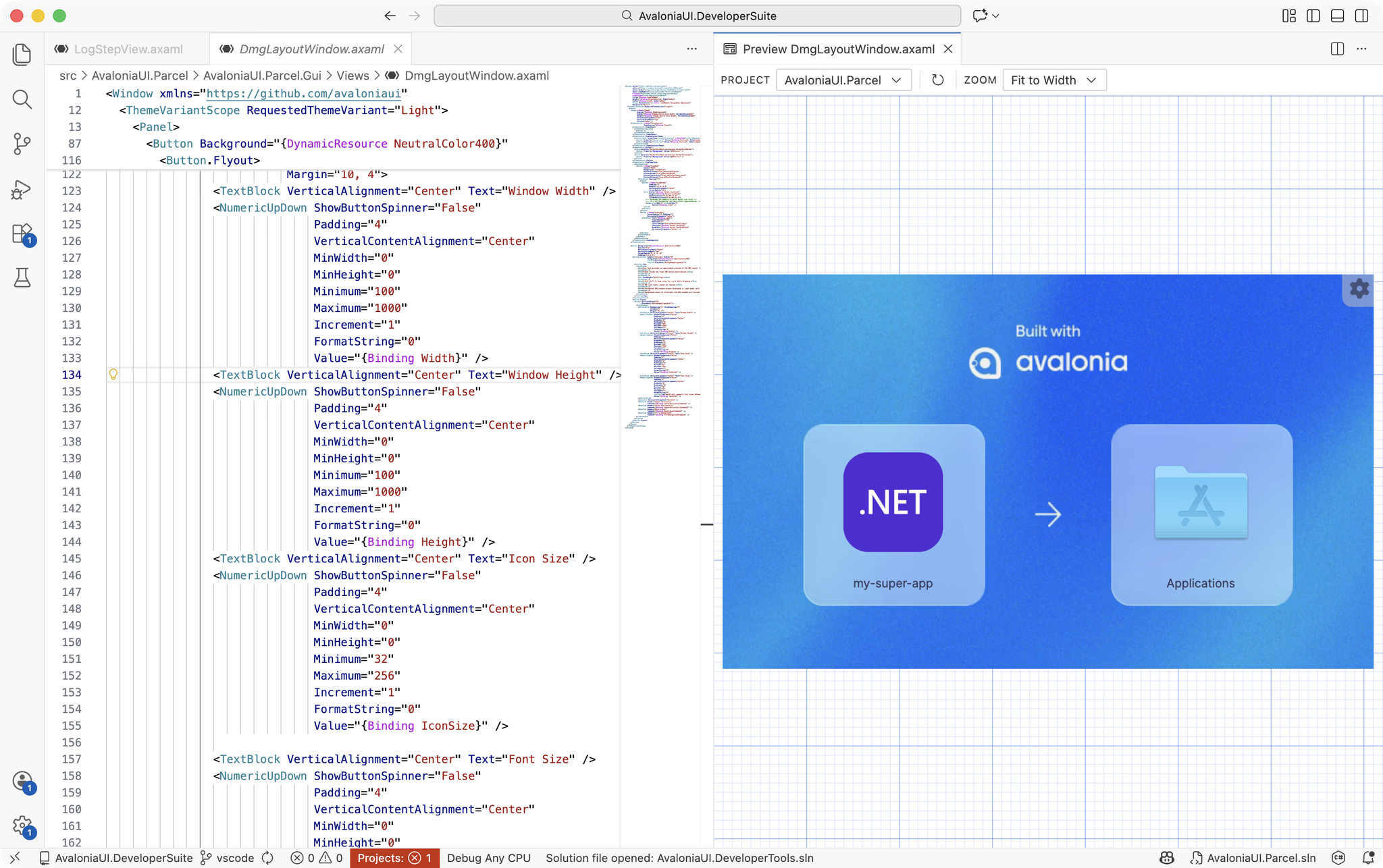
A live previewer, in the free extension
Edit XAML and see it rendered beside your code, with no build step. The Visual Studio Code extension is free for commercial development, so the whole team can have it.
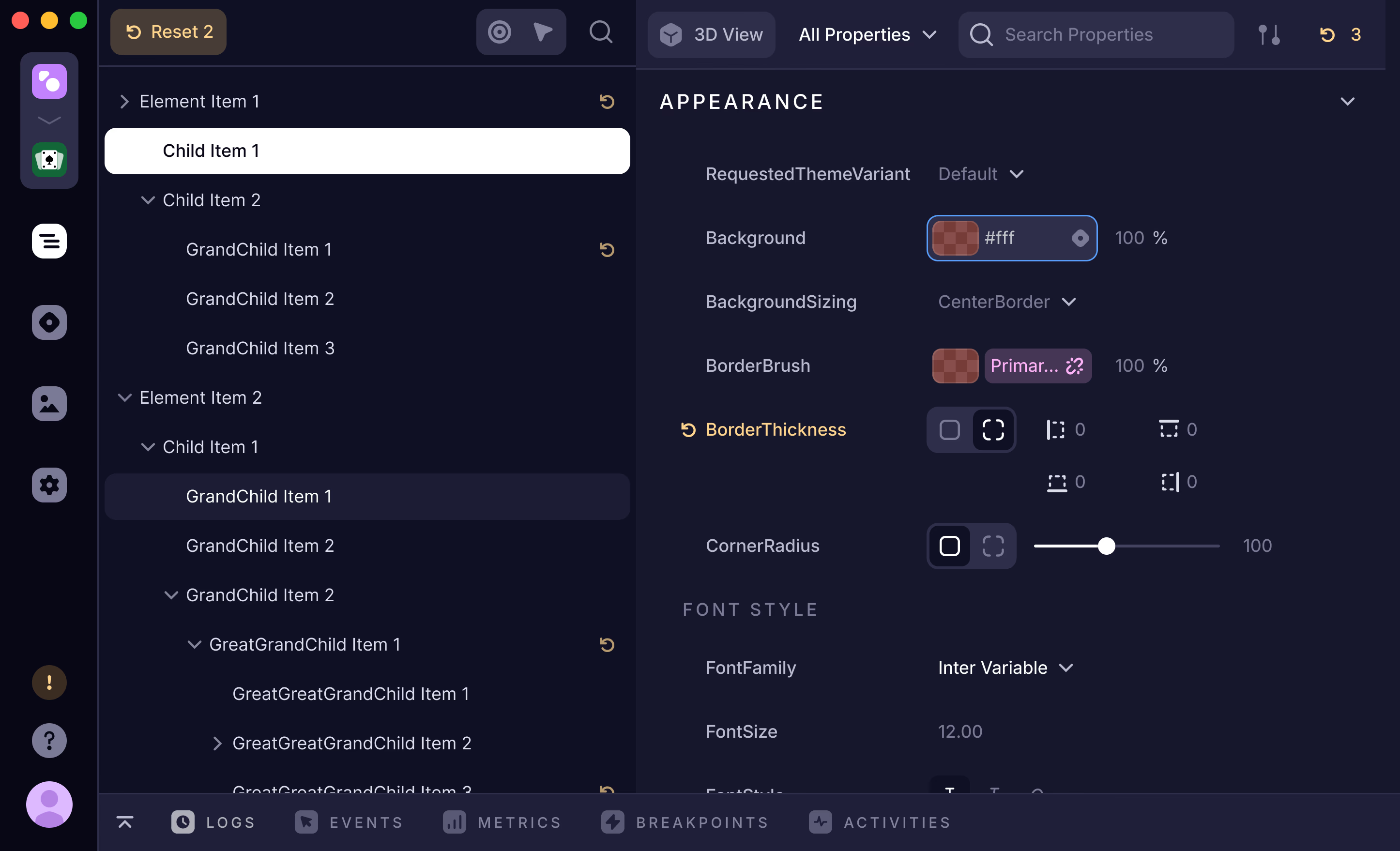
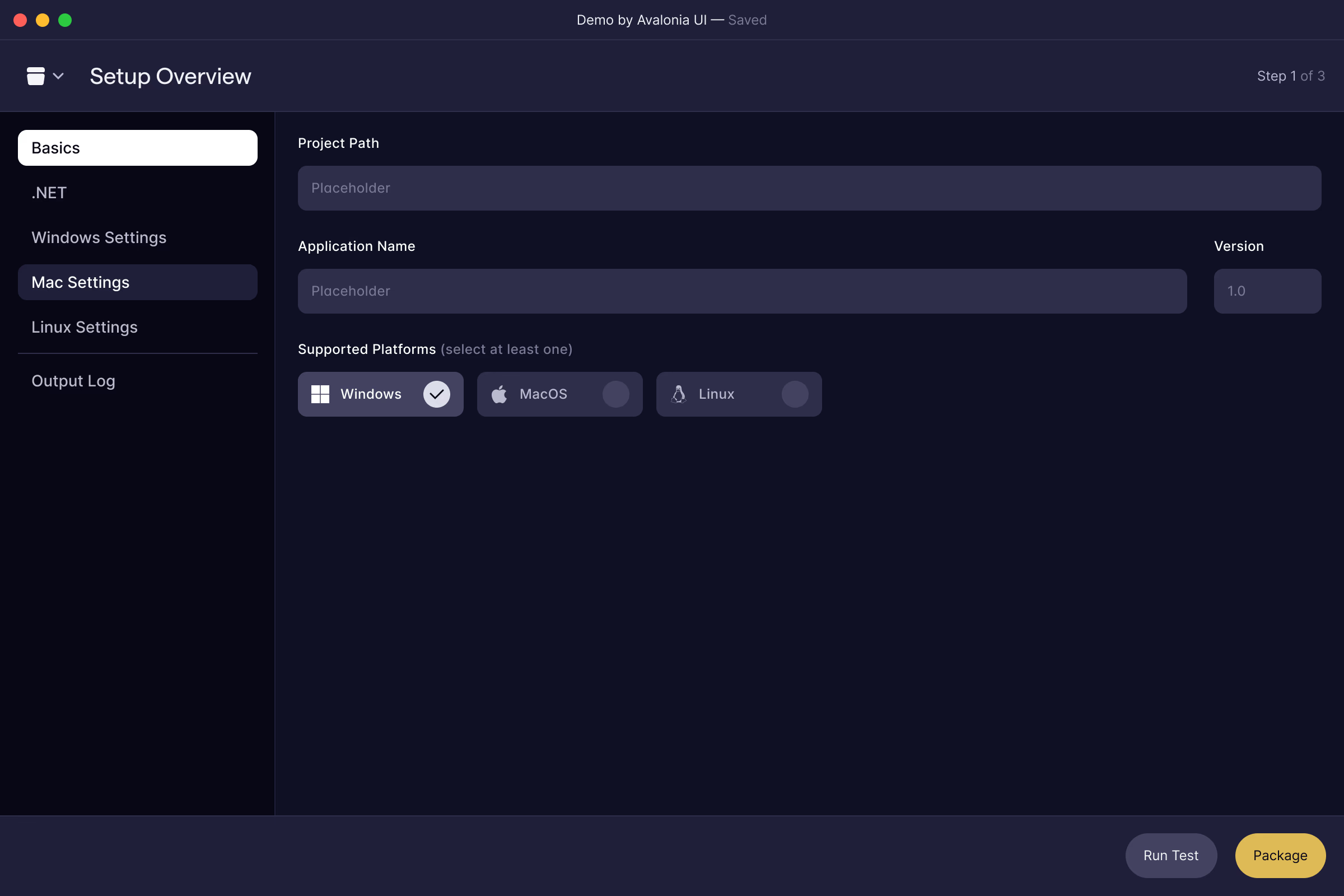
The framework, the headless test platform and the Visual Studio Code extension are free for commercial work. DevTools and Parcel are part of Avalonia Plus.
See what’s free and what’s paid“We had an initial implementation using Qt but its development turned out to be too slow and we had no internal team prepared to switch to this technology.”

Tanya Dilkovska-Petrova
Chaos · On the Qt build they replaced with Avalonia
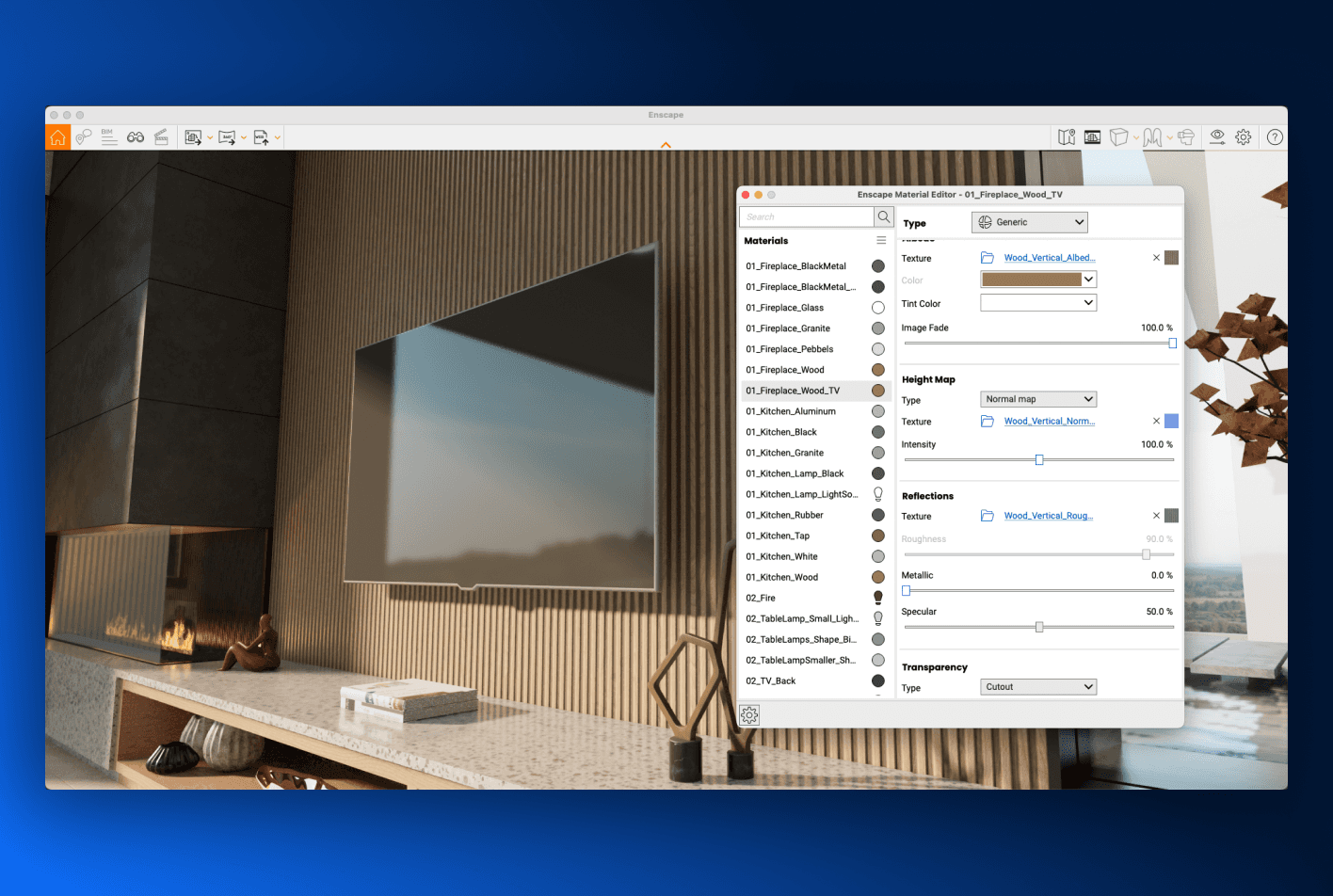
Enscape by Chaos. Built with Avalonia.
C# on Linux
Ships on Linux today, from the workstation to the bare framebuffer.
Avalonia has four Linux windowing backends, from X11 and native Wayland on the desktop to DRM and the framebuffer on a device with nothing underneath.
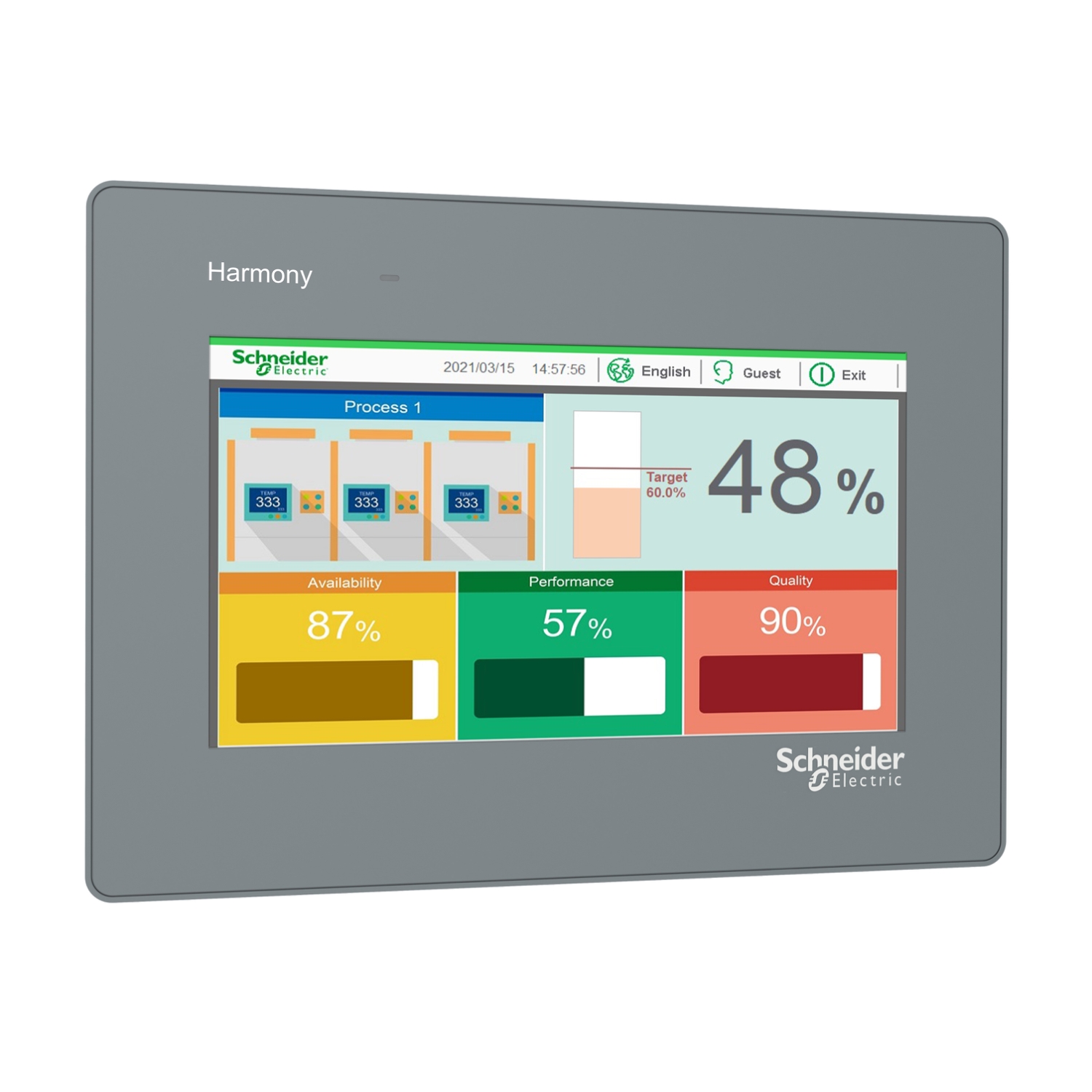
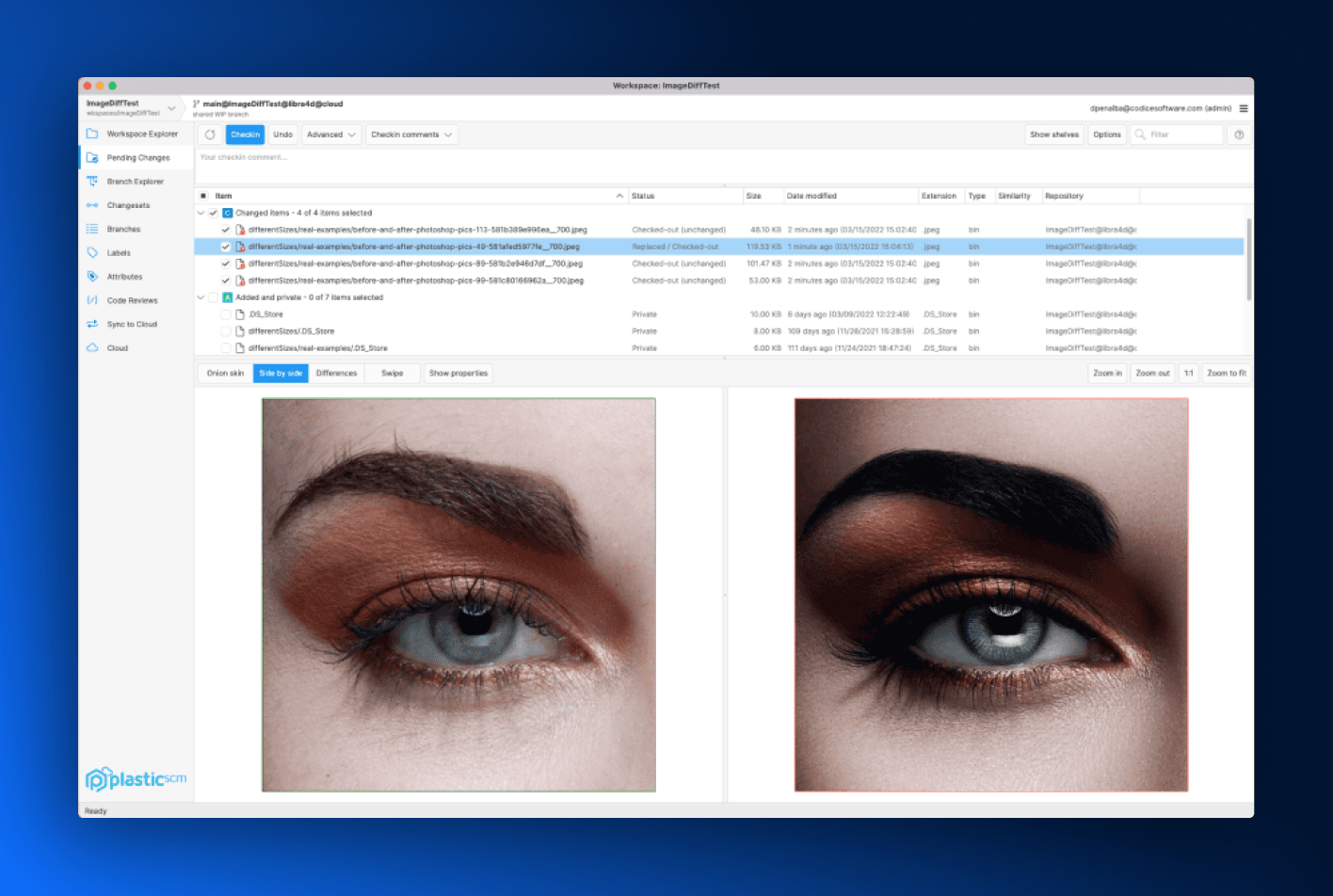
X11, Wayland, DRM or framebuffer, on x64, ARM64 and ARM32. Tested against every release on Ubuntu 25.x, Fedora 43, Debian 13 Trixie and Raspberry Pi OS, on embedded.
Avalonia on LinuxLicensing and control
Your maintenance plan shouldn’t depend on a licence renewal.
A product can stay in service for years after its launch. Avalonia’s MIT framework keeps your right to develop, fix and distribute it independent of a commercial subscription. Buy engineering support when you need it. Keep control of your code.
Your framework rights don’t expire.
Avalonia’s MIT licence lets you use, modify and distribute the framework, including in proprietary products. Retain its copyright and licence notice. There’s no subscription, revenue ceiling or renewal required to keep developing.
You can keep fixing what you ship.
Under current commercial terms, you can keep distributing an application after expiry, with distribution licences where required. You can’t keep using Qt’s tools to develop or maintain it, including bug fixes and security updates, without an active developer licence. Avalonia’s MIT framework has no such renewal condition.
In the EU, security fixes are becoming a legal duty.
The Cyber Resilience Act’s full requirements apply from 11 December 2027, and they include security updates across a product’s support period. Your right to develop those fixes shouldn’t lapse with a subscription. Under MIT it can’t, and Enterprise LTS releases add five years of security updates.
Paid support doesn’t put the whole team on a paid framework.
Avalonia Enterprise seats cover people using paid tools, developing with premium controls, accessing their source or requesting support. Work limited to the MIT framework needs no seat. Simply building, running or testing an app containing the controls doesn’t require one either.
An Enterprise renewal buys continued service.
Enterprise includes perpetual rights to tools and components obtained during a valid support period, subject to the licence terms. Renewal keeps updates and support active. If support lapses, those version rights continue; premium source access and support services end.
Moving from Qt
Keep your C++. Change what it costs to build the UI.
Years of investment in C++ don’t have to become years of future UI licence bills. Avalonia applications can call native code through .NET interop. Define the boundary, retain the libraries that earn their place and build the next interface in C# and XAML.
Keep the investment
A C++ core doesn’t commit you to a Qt UI.
- Retain native libraries behind a C-compatible API or a service boundary that your .NET application can call.
- Separate domain logic from Qt UI dependencies. QML views and Qt Widgets need a new Avalonia implementation.
- Check retained Qt dependencies separately. Replacing the UI doesn’t remove the licensing obligations of Qt code you still use.
Prove the return
Start with one representative workflow.
- Build it with your own data and native libraries on the hardware you intend to ship.
- Measure implementation time, iteration speed, startup, memory and rendering against the existing product.
- Compare migration effort with the remaining licence, distribution and maintenance costs over the product’s life.
Lifetime cost
Ship ten units or ten million. The framework bill doesn’t change.
A per-device licence turns a tooling cost into a line on every unit you ship. Qt doesn’t publish the price. In 2020, one developer on Qt’s own forum was quoted €7,246 for their first 100 devices, payable before shipping one.
Your product
Your Qt quote
Qt’s published list price for Device Creation Professional. Replace it with your negotiated price.
Qt doesn’t publish this price, so it starts empty. Enter the figure from your quote, or try a publicly reported one. Each is dated, and none is Qt’s.
Qt licences over 5 years · EUR
€344,500
Developer licences only, at the price above. Add a per-device price to include 10,000 devices.
Avalonia framework over 5 years · EUR
€0
10,000 devices shipped with no distribution fee. Optional Avalonia Plus tooling for all 10 developers would come to €14,950 over the same period.
An illustration, not a quote: the same team and volume every year, in EUR, excluding VAT. The reported device prices are a 2020 quote from Qt’s forum and the low end of a Qt consultant’s 2023 estimates. Yours will differ.
Shipping today
Device interfaces. Professional tools. In production.
An embedded Linux HMI, a memory profiler and a design application, each shipped from one Avalonia codebase. Their published stories describe the work.
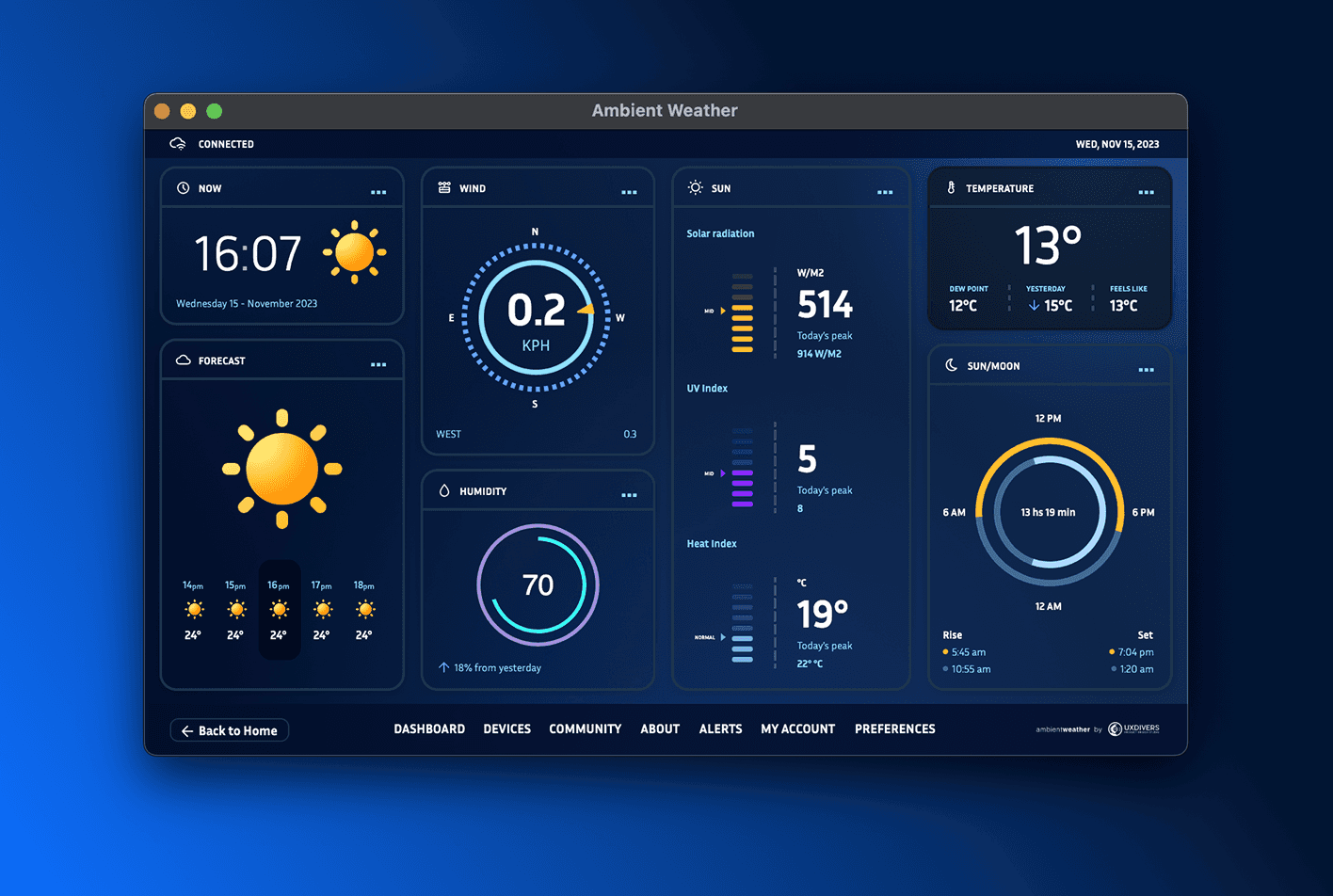
Ambient Weather HMI
A pixel-perfect interface by design studio UXDivers, drawn from one Avalonia codebase and built to run on low-power embedded Linux hardware.
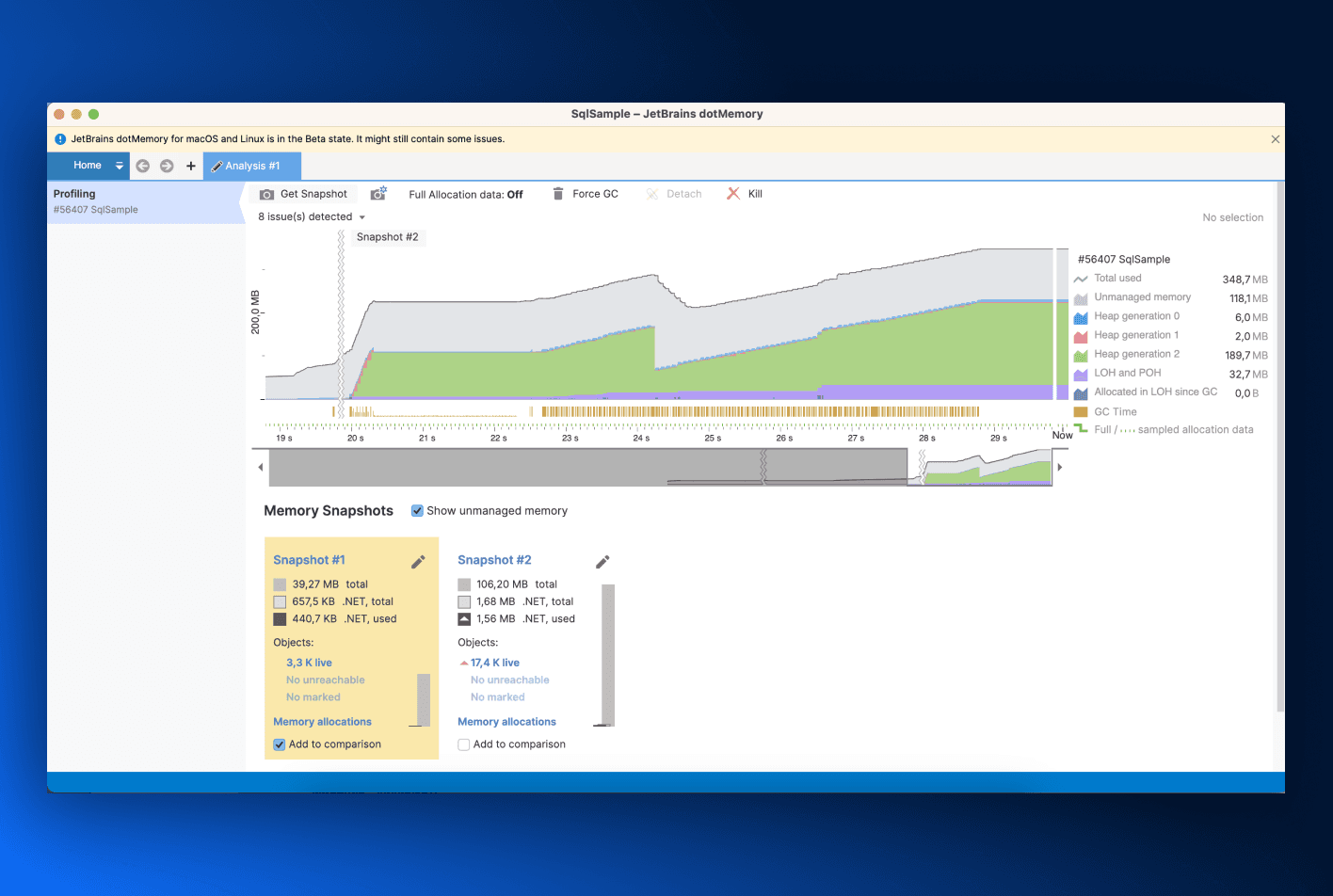
JetBrains dotMemory
The .NET memory profiler, rebuilt on Avalonia so one codebase serves the Windows, macOS and Linux editions.
Icons8 Lunacy
A full graphic design application with built-in AI tooling, shipped for macOS, Windows and Linux.
In their own words
What developers who know Qt say about building with Avalonia.
“I came into C# from a C++/Qt background and find the performance comparable.”
General_Fan4306
Reddit r/csharp, 15 September 2026
Read the original post“A hell of a lot easier than dealing with Qt.”
mcguirev10
X, 11 May 2026, on shipping one Avalonia app to Windows, Linux and Android
Read the original postSide by side
What you pay for. What you build with. Where you ship.
Compare the framework, the commercial terms and the workflow your team will actually use. Avalonia’s free framework and its optional paid products have distinct licences. Qt’s open-source and commercial paths do too.
Licensing and lifetime cost
Development
Deployment targets
Qt Bridge for C# 0.4.0, released 17 September 2026
Qt prices and terms
Qt Bridge for C#
Reported device prices
Qt facts checked 21 September 2026. A beta moves quickly, so check the Bridge rows against Qt’s current release. General information, not legal advice.
FAQ
Before you
choose your framework.
Licensing details are based on Qt’s commercial FAQ, small-business terms and Avalonia Enterprise’s licence.
Yes. Teams can adopt Avalonia at zero cost. The MIT-licensed framework and free Visual Studio Code extension are available for commercial development, including proprietary applications and embedded devices. There are no framework developer fees, runtime royalties or per-device distribution fees. Retain the required copyright and licence notice. Improved tooling, premium controls, support and Avalonia XPF are optional commercial offerings.
Qt for Device Creation Professional is €6,890 per developer per year for desktop, mobile and embedded development. An additional Qt DC Distribution licence is required for each device under standard commercial terms; Qt doesn’t publish those prices. Avalonia is free to adopt, develop with and ship, including a free Visual Studio Code extension for commercial development. For 10 developers, that’s €68,900 a year for Qt versus €0 for Avalonia, before Qt distribution charges. Teams that want improved tooling can optionally choose Avalonia Plus, starting at €299 per developer per year. These are annual EUR list prices excluding VAT; feature and support packages differ. Qt’s open-source and eligible small-business options have different terms.
Use your actual Qt quote and agreement. Include the people who need licences, device distribution charges where applicable, and developer subscriptions for the years you expect to maintain the product. Compare equivalent support and tooling on both sides, then add the cost of implementation or migration. A discounted first-year seat price isn’t the lifetime cost of a product.
Yes. Qt publishes Application Development Enterprise at €546 per developer per year and Device Creation Professional at €1,090 per developer per year. Its eligibility criteria include a maximum of €1 million in combined annual revenue and funding and a limit of three small-business licences. Eligible Device Creation customers receive a distribution-licence waiver. Standard terms apply when that eligibility ends; check Qt’s current agreement for the transition rules. Avalonia’s MIT framework has no revenue or funding threshold.
Qt also offers open-source licences. Where the relevant LGPL/GPL terms fit your product, a commercial Qt licence isn’t required. Some modules have different terms. Qt’s open-source licence is the LGPL, which is open but not permissive. You must deliver the library’s source and let users re-link your application against a modified Qt. Whether they must also be able to install it on the device depends on the product: the licence ties that to consumer products, so it turns on what you ship and how you distribute it. Some Qt modules are GPL-only for open-source users. A team that can meet those terms avoids Qt’s licence fees, so assess them against your distribution model before you rely on them. Avalonia’s MIT licence asks for one thing: keep the copyright and licence notice. There are no source-delivery, re-linking or installation terms to assess, whatever you ship.
Qt doesn’t publish it; its pricing page lists the distribution licence as “Request for quote”. Publicly reported figures give a sense of scale. A developer on Qt’s forum in 2020 was quoted €7,246 for 100 distribution licences, about €72 a device, payable before shipping the first unit. Qt consultant Burkhard Stubert estimated in 2023 roughly €50 to €100 a device at 100 units, €8 to €10 at 2,000 and €1.25 to €2 at 100,000. None of these is Qt’s price list, and your quote will differ. Avalonia’s framework has no per-device fee at any volume.
Standard commercial Qt device deployments require distribution licences. Ordinary desktop and mobile apps don’t pay per copy, and eligible Qt Device Creation small-business customers have a distribution-licence waiver. These fees aren’t a property of Qt’s open-source licences. Avalonia’s framework has no distribution fee for applications or devices.
Under current commercial terms, you can keep distributing an application after expiry, with distribution licences where required. You can’t keep using Qt’s tools to develop or maintain it, including bug fixes and security updates, without an active developer licence. Avalonia’s MIT framework needs no renewal. Avalonia Enterprise preserves the licensed use of versions obtained during a valid support period, subject to its terms; updates, support services and premium source access end when that coverage lapses.
Build your product. Keep your margin.
Use C# and XAML on an MIT-licensed framework. Add the tools and support your team needs, with no per-device framework fees as you grow.